
Concussion and Visual Dysfunction
Have you experienced a concussion recently? If so, your immediate focus would be to rest and manage symptoms such as dizziness. While that’s important, there’s often another aspect to it – protecting your vision.
Traumatic brain injuries, in some cases, can lead to visual disturbances. Even a mild concussion can impact how your eyes and brain work together. While dizziness and blurry vision may be obvious signs of a problem, there can also be other severe symptoms. Fortunately, with proper care and guidance, you can ease your discomfort right from the root.
What Are Concussions?
A concussion can be described as a traumatic brain injury caused by a violent blow to your head, neck, or body. Even if it’s not so severe, it’s still classified as a brain injury, as it can alter the brain’s normal functioning. Common causes of a concussion can include:
- Slip, trip, or fall accident
- Car accident
- Sports injury
- Workplace accident
- Domestic abuse, etc.
Concussions can lead to ongoing neurological issues and are more common among kids, teens, and senior adults. It’s important to receive targeted treatment, or it can further compromise your vision and impact your everyday life.
Understanding Your Vision
There are two visual processing pathways in your brain: the ventral visual stream, or the “what” pathway, and the dorsal visual stream, or the “where” pathway. The ventral stream is more conscious and slower, whereas the dorsal stream is quicker and subconscious.
The ventral stream allows your brain to see and process the world and its details. The dorsal stream, on the other hand, helps create a spatial map of the environment and enables you to know where you are in space.
Concussions can disrupt either or both these visual systems. Some patients can have 20/20 vision but experience unexplained symptoms, while others can have problems with both perception and action.
How Do Concussions Affect Your Vision?
Your vision involves a complex pathway between your eyes and your brain. This connection supports coordinated eye movements, focusing abilities, interpreting visual information, and responding to your environment. After a concussion, this delicate neural channel can become disrupted, leading to frustrating visual symptoms like the following:
- Blurry vision
- Difficulty focusing
- Trouble tracking moving objects
- Eye pain, pressure, or strain
- Double vision
- Light sensitivity
- Intolerance to motion
- Balancing issues
- Less spatial awareness
- Reading challenges
- Problems with screen use
These issues can affect your day-to-day activities at work, school, and while driving. You require a specialist, particularly an optometrist, to assess your condition and treat you right away. It helps restore your vision, balance, and overall quality of life.
Always Tell Your Optometrist That You Have Had a Concussion
When seeing your optometrist, let them know that you’ve recently had a concussion or if you have a history of concussions, even if it happened long ago. Your optometrist is a critical resource in your well-being, so it’s best to share as much information as possible.
Several symptoms of a concussion can be subtle and not so evident in the beginning. You could have also unconsciously adapted to your deteriorating vision, masking the underlying issues.
So, if you sustain a concussion, it’s extremely important to discuss it with your optometrist. Knowing your precise medical history allows them to create a targeted treatment plan to prevent challenges, restore your vision, and monitor any changes.
What Are Your Treatment Options?
Modern eye care practices employ advanced diagnostics, including computerized visual performance testing, eye movement tracking technologies, functional visual field analysis, and binocular vision or accommodative testing, to deliver personalized treatments. These tools provide specific benchmarks to guide your recovery efforts and set a precise timeline.
Your treatment plan can include eye-teaming or focusing exercises, accommodation/vergence retraining, neuro-optometric rehabilitation, and a gradual reintroduction of screen use to train your brain more effectively. Your eye doctor might also suggest home-based digital therapies, prism lenses, or specialty filters to improve your vision. You may also be referred to a neurologist, depending on the severity of symptoms.
These multidisciplinary approaches are necessary to help you regain your visual skills for optimal everyday functioning. They can also take a few weeks to a few months to show full effects, depending on the severity of your injuries. If you or a loved one has suffered from trauma, we suggest scheduling a comprehensive eye exam without any further delay and getting the right solutions for your needs.
Timely Intervention Can Make a Difference
Post-concussion visual symptoms often resolve within weeks. If they persist and affect daily life, it’s time to seek help immediately. The risk of waiting for too long can be dangerous. Unaddressed vision issues can prolong headaches, interfere with cognitive recovery, and disrupt work or academic performance. This is why early intervention is crucial for your overall well-being.
Modern concussion care offers precise ways of identifying and addressing visual dysfunction. Eye doctors rely on technologies that go beyond the standard eye chart. These sophisticated systems can reveal subtle deficits that are often overlooked during traditional eye exams.
The latest tools and technologies can assess your reaction time, processing speed, depth perception, and focusing abilities to understand your cognitive load, balance, and coordination capability. These methods allow eye doctors to identify problems promptly, treat them more effectively, and help you return to normal visual function with better clarity.
When to Seek Professional Help?
If you’re experiencing the following symptoms, it may be time to seek a professional evaluation:
- Visual discomfort for more than two to four weeks
- Continued difficulty reading or tracking text
- Headaches after visual effort
- Ongoing light or motion sensitivity
- Challenges with driving or computer use
While concussion-related problems improve within two to four weeks, persistent vision changes indicate that the visual system is struggling to recover independently. If the symptoms do not improve or worsen over time, you would require immediate professional assistance.
A comprehensive eye exam performed by a concussion-trained optometrist helps create a structured pathway for effective visual rehabilitation. At Maple Grove Eye Doctors, we specialize in providing this level of assessment and care. If you’re looking for a trusted, skilled team, we’re the name to rely on.
What to Expect During Your Eye Exam?
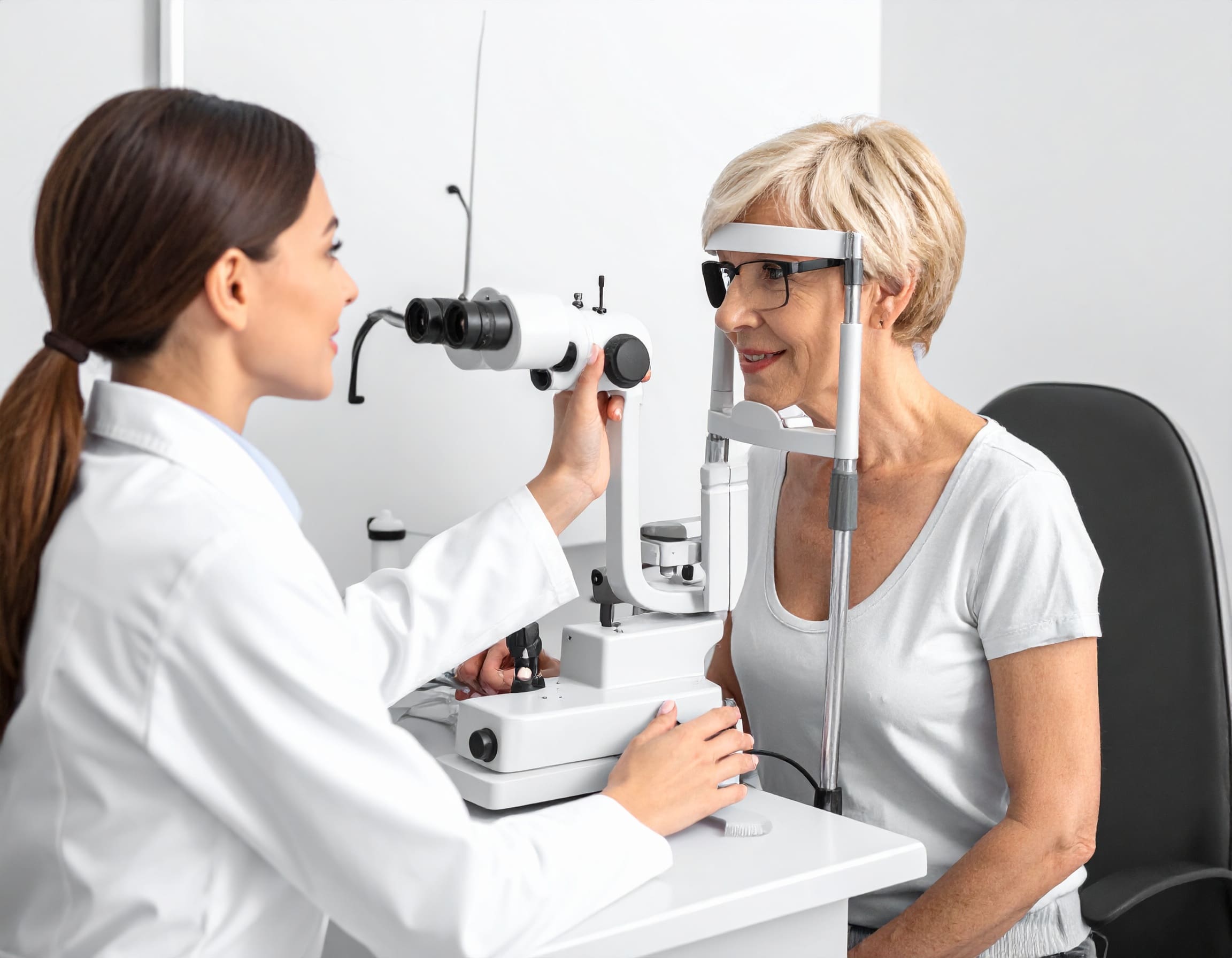
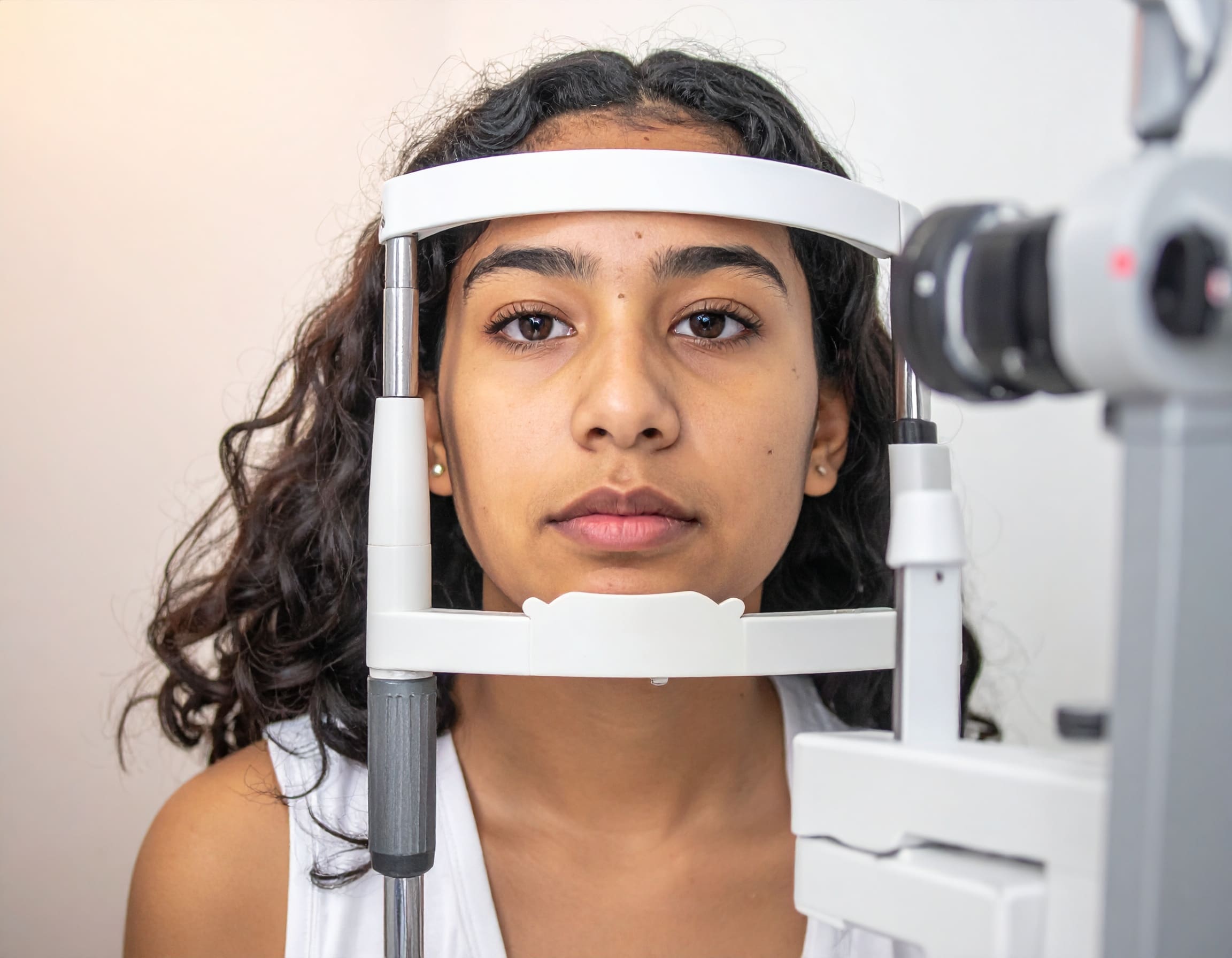
A post-concussion eye exam is a specialized evaluation process. Doctors at our facility thoroughly review your symptoms and functional history. They also assess your full binocular vision, eye movement, eye tracking, visual–vestibular function and focusing abilities with advanced technologies. It helps identify deficits, interpret findings, and design an individualized treatment plan tailored to your unique needs. Your plan might include vision therapy, prism lenses, or digital rehabilitation tools, among other options such as a referral to a neurologist..
We might also refer you to other professionals, such as physical therapists, psychologists, or neurologists, to provide holistic care. With appropriate, complete, and coordinated care, we can help you navigate a safe and efficient recovery pathway.
Book An Appointment Today
At Maple Grove Eye Doctors, we prioritize a structured recovery process and a gradual return to everyday activities. We blend necessary vision therapies with practical lifestyle adjustments for desired outcomes. Patient education also remains at the core of our approaches, so you understand the recommendations and take active, informed steps toward your recovery. Follow-up assessments are equally important for monitoring progress and adjusting the treatment plan, thereby supporting long-term visual stability.
If you’re persistently having trouble seeing, concentrating, or processing visual information, do not wait for your symptoms to subside on their own. Post-concussion symptoms can be serious and require early evaluation to prevent long-term complications. A comprehensive eye exam at Maple Grove Eye Doctors can help relieve your discomfort and reduce your recovery time. Call (763) 416-0622 for better assistance.